Somaliland government raises alarm as drought crisis deepens nationwide
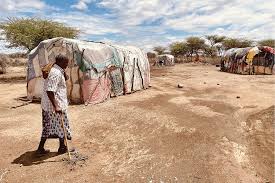
Somaliland’s government has raised fresh concerns over a deepening drought that continues to intensify across the country. Officials warn that widespread food and water shortages now pose a serious threat to thousands of families.
Somaliland Government has issued a stark warning over the rapidly worsening drought that continues to grip large parts of the territory, describing the situation as “deteriorating by the day” and posing a severe threat to human life.
In a statement released after a Cabinet meeting chaired in Hargeisa, ministers highlighted that widespread shortages of food and water are pushing communities to the brink, with conditions intensifying across all regions. The communique detailed assessments from the National Drought Response Committee, which reported that the drought’s impact has reached alarming levels.
Sheikh Abdullaahi-Baashe Daahir Jaamac, the Minister of Religious Affairs and Endowments and a member of the national drought committee, briefed the Cabinet on the dire reality on the ground. He noted that conditions are worsening daily, pointing to expanding food insecurity, acute water shortages, and weakening livelihoods.
“The drought across all regions continues to intensify day after day, with widespread scarcity of food and water that poses a serious threat to the lives of our people,” the minister said, according to the statement from the Presidency.
The Cabinet emphasized the urgent need for a coordinated national response to support communities already pushed into crisis. Officials called for immediate mobilization of resources and stronger collaboration between government agencies, humanitarian partners, and local actors to avert a humanitarian disaster.
Somaliland authorities also voiced deep concern over deteriorating conditions in internally displaced persons (IDP) camps, where water scarcity, limited food supplies, reduced healthcare services, and shrinking livelihood opportunities are compounding the suffering. The cumulative impact, they warned, risks triggering further displacement and worsening vulnerabilities among already fragile populations.
Among the hardest-hit areas is the Saraar region, where residents are facing extreme water shortages and mounting pressure on remaining resources. Local communities report that wells have dried up, livestock deaths are rising, and families are increasingly reliant on emergency assistance.
The government urged the public, civil society organizations, and international partners to contribute to the national relief effort as drought conditions show no sign of easing. Authorities stressed that without sustained intervention, the humanitarian consequences could escalate rapidly.
The Minister of Resettlement and Humanitarian Affairs of Somaliland, Saleebaan Duaale Haji Jaama, has raised alarm over a sharp decline in international humanitarian assistance, warning that vulnerable displaced communities are now facing an increasingly dire situation. According to the minister, aid that was previously provided by international organizations including cash transfers, food supplies, and clean water has largely come to a halt in recent months, leaving thousands of internally displaced persons (IDPs) exposed to worsening hardship.
Minister Saleebaan noted that the prolonged and recurring droughts that have struck Somaliland in recent years have devastated livelihoods, destroyed pastoral assets, and pushed displaced families to the brink. He emphasized that without urgent intervention, conditions inside IDP camps could deteriorate even further, with limited access to food, water, healthcare, and basic services.
"The displaced communities across the country are facing an extremely difficult reality," the minister said. "We call upon the Government of Somaliland, local humanitarian actors, and all domestic stakeholders to swiftly provide emergency support to ease the heavy burden on the tens of thousands of families living in displacement camps nationwide."
Humanitarian officials and local observers continue to warn that the drought’s impact is deepening, with declining external funding exacerbating the crisis. Many IDP settlements are now reporting critical water shortages, rising malnutrition risks, and limited access to essential services.
As Somaliland grapples with one of its most challenging humanitarian moments in recent years, authorities are appealing for coordinated national solidarity to protect vulnerable populations and prevent further deterioration of living conditions.